
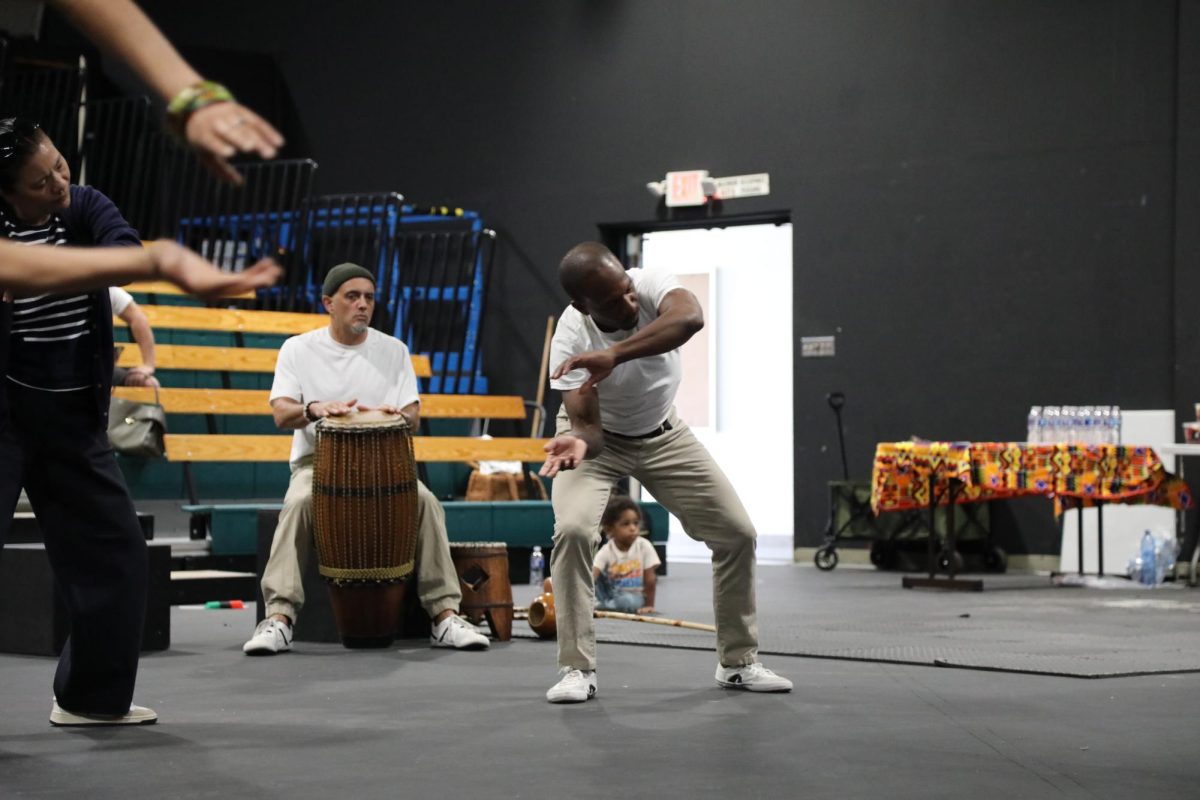
In honor of Black History Month, Glendale Community College hosted Rhythm of Resistance: The Journey of Capoeira Angola on February 25th.
This event highlighted the art form’s roots in resistance and resilience. The event took place in the Sierra Nevada Mod Theater and people of all ethnicities and walks of life were in attendance.
“I put this event together for us to be able to explore the diaspora of the African experience and the evolution of Capoeira,” Carla Ruiz, faculty counselor and cultural diversity coordinator, said.
Students, teachers, and a mother trying to wrangle her toddler all settle down into the bleacher seating of the theater room. Charles Williams, the Capoeirista in charge, led the attendees into a guided chant.
He instructed everyone to close their eyes and lightly beat on their chest. The room became very still as everyone entered a trance-like state.
The energy in the theater became singular and was so powerful that even when a phone went off in the room not one single person opened their eyes or seemed to notice.
Williams chanted in a soft but powerful voice, making sounds that were between modern language and instinctive primal tones. He woke everyone up and guided the attendees into a large circle on the theater floor.
When learning Capoeira, the first move you are taught is Jenga. “They say if you can do Jenga, you can play the game,” Williams said.
Everyone is partnered up and instructed to move in circular motions along the length of the floor without taking their eyes off their partner.
They then move to the “outro lado” which translates to “other side” in Portuguese. Williams was leading a lesson in self, history, language, and movement.
When the circle was first formed it was awkward and spread out, but now the participants are laughing comfortably and huddled in a lot closer to one another.
A sense of comradery and the joy that comes from letting go is spread across everyone’s faces as they smile together in movement.
“You can do Capoeira to any type of music,” Williams said. He goes to his laptop to turn on a mix of drum heavy electronic dance music.
The group goes through a couple more Capoeira moves along the theater floor before retiring back to the bleachers for a water break.
Ruiz offerd everyone acai bowls as they catch their breath. Williams then sat back down and faced the crowd as they ended the session playing traditional berimbau music, which consists of a long single stringed bow instrument and a shaker called a caxixi.
The harmonious twangs from the berimbau and the soothing tone of the Capoeiristas voices created the most magnificent sound bath to end the session.
It was after this moment of tranquility and bliss that I decided to interview some participants about their experience that day.
“I feel absolutely phenomenal and so in touch with everyone in the room,” Dionne Tate, a GCC student, said.
All of the participants said they would absolutely join in on a Capoeira Angola activity again.
For more information about the practice and to join one of Williams’ classes you can head to solsinmotion.com.